


Week 1 - Hope
Art & Artist Highlight


Rumination 3
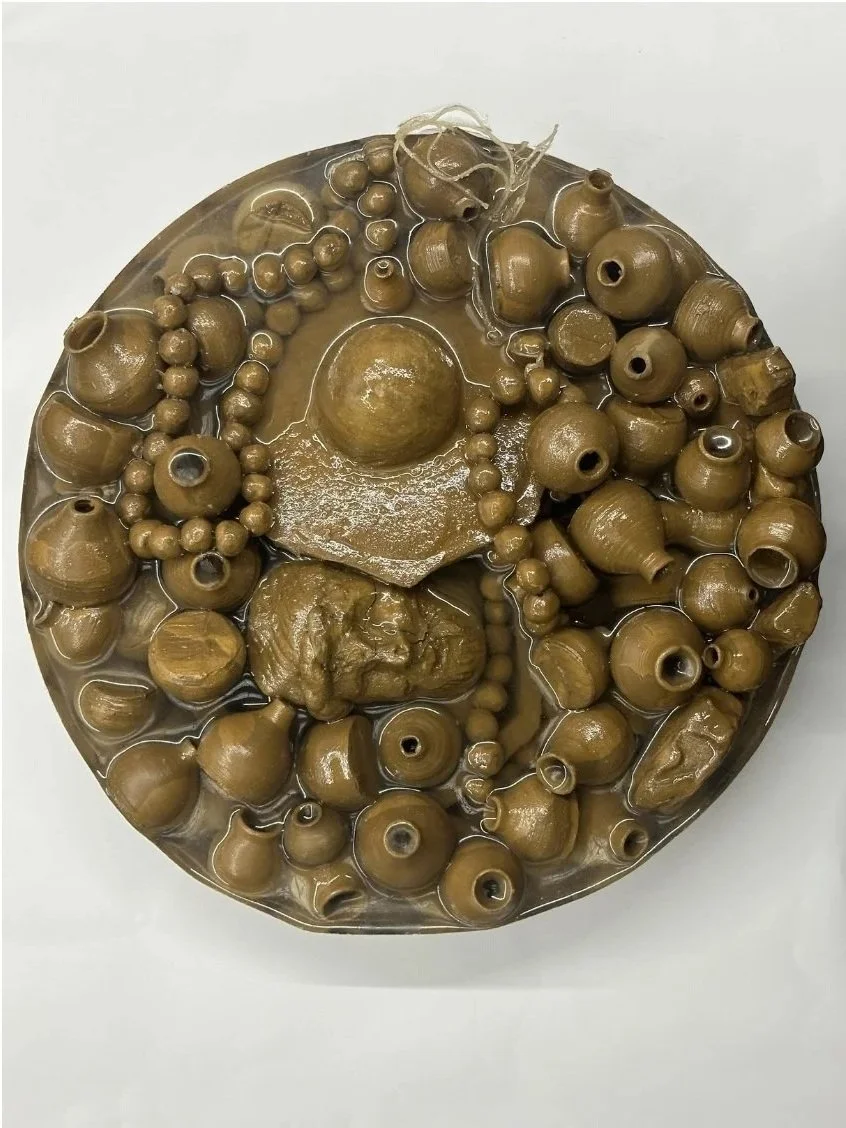
Mixed technique - clay, string and epoxy resin
OLA ZAITOUN
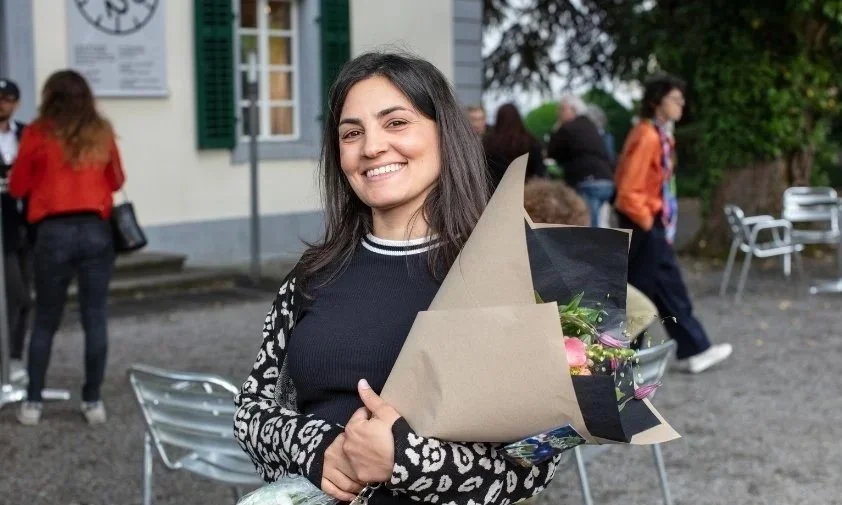
Ola was born and raised in Qana to a Christian family with roots in Galilee spanning centuries. Her practices span diverse mediums, and her work has been exhibited across Historic Palestine and internationally.
Following October 7, 2023, Ola turned to wheel-throwing as a therapeutic, meditative practice, shaping small jars inspired by Qana’s historical wedding water jars associated with the biblical story of Jesus turning water into wine. Instead of traditional kiln firing, Ola created several assemblages using the jars and souvenir items from her father’s souvenir shop, sealing them with epoxy resin. Thus, vessels and souvenirs once purchased by pilgrims as carriers of the place’s stories become heavy, immobile forms—metaphors for time suspended by war, memory, and the Palestinian desire to tell stories in a world that too often refuses to listen.
Week 1 - Hope
Story
Nakba | Tony Deik
Following the tradition of Palestinian Christian witness, I offer here my story and my family’s story of the Nakba (Arabic for “catastrophe”). This is the word Palestinians use for the ethnic cleansing of Palestine that began in 1948 and continues today. I pray this testimony will encourage deeper listening.
My mother’s family is from Shefa-Amr, in the Galilee. In 1948, when Zionist troops invaded the town, my grandfather Najib, his mother, and his siblings were forced to flee. They had heard of the Zionist massacres, for example at Deir Yassin, and feared the same fate. They fled to Bethlehem and lived there as refugees in garages for many years.
For twenty years, my grandfather could not even visit the house where he had lived until his late twenties. Then, in 1968, he was finally allowed to visit. He went with his sister and my mother, who was eight years old at the time. But when they knocked on the door, a Jewish family opened it. They were living in my grandfather’s home.
My grandfather had a sister, Jalileh, who lived with her family in Akka (Acre). She did not survive 1948: she was killed when Zionist forces poisoned the city’s water supply.
A few years ago I found an article in Middle Eastern Studies by the Israeli historians Benny Morris and Benjamin Kedar. Drawing on Israeli military archives, they show that Akka was part of something wider: a secret operation to poison Palestinian water supplies, codenamed “Cast thy bread.” The name is a horrifying abuse of a beautiful biblical text, Ecclesiastes 11:1, originally an invitation to do good deeds.
The Nakba did not end in 1948. That was only the beginning. My grandfather was forced to leave his town in 1948. I was forced to leave mine in 2017, and my family still cannot return.
In May 2017, my Bolivian wife, Sara, and I left Palestine on a round-trip ticket to Bolivia. We were planning to stay for three months. Nine years later, we are still here, in forced exile, and each year, the possibility of returning seems more distant. How did this happen?
Israel maintains a system of discrimination against Palestinians, partly codified in dozens of laws and partly enforced through unwritten military rules and practices imposed on Palestinians in the occupied territories—a system widely recognized as apartheid.
One of Israel’s apartheid practices concerns marriage to foreigners. If I were a Jewish settler in the West Bank, living on land seized from Palestinians, the Israeli authorities would give my wife a spousal visa without difficulty. But since I am Palestinian, my foreign spouse received only a military permit, under which she could not work, drive, move freely, or use the airport. The permit expired every six months and could not be extended beyond twenty-four months. A friend of ours, also a foreigner married to a Palestinian, was told by an Israeli officer: “It is your problem that you married an Arab. We only give you a permit to visit your husband. Once it expires, you need to leave.”
This is what happened to us. When Sara’s twenty-four months expired, we left and were unable to return. Despite appeals to Israeli authorities, support from churches and the British Consul General, and a family reunification application, every effort failed.
In the face of Nakba and apartheid, what should a Christian response look like? Many Christians, perhaps unknowingly, call the Nakba a “miracle of God.” How long will Christians remain oblivious? When will we begin listening to each other, especially as we share sacred stories of suffering?
It is high time to start.
Anton (Tony) Deik
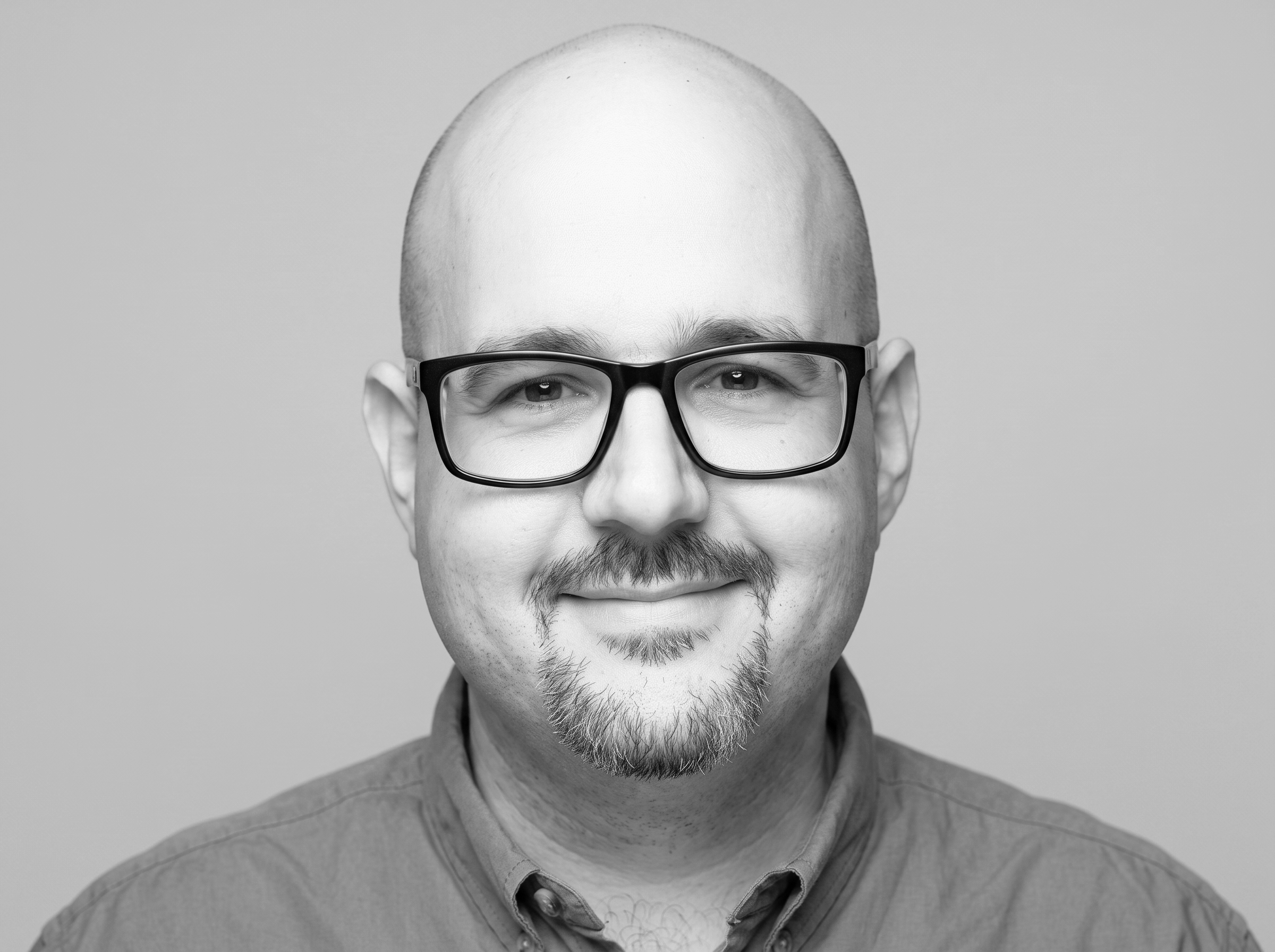
Tony Deik is a Palestinian Christian theologian and biblical scholar. He serves as Executive Director of the Bethlehem Institute for Peace and Justice (BIPJ), Vice-Chair of the Board of Directors of the International Fellowship for Mission as Transformation, and Research Associate at the Centre for the Study of Bible and Violence. He holds a PhD in New Testament from the University of Aberdeen and Trinity College Bristol. He has lived and served in different parts of the world for the last 16 years, including the Philippines, Hong Kong, England, Palestine, and Bolivia. His forthcoming books include Justice, Righteousness, and Wealth Ethics (Mohr Siebeck) and the co-edited volume Gospel Witness in the Shadow of Gaza (Wipf and Stock).
⇠ HOPE
In Partnership with